Every decision has a reason. The reason is the work.
We don't start from a component budget or a benchmark target. We start from the act of making — and work backward to the hardware.
One question guides every choice.
Not: what chip scores highest? Not: what feature closes the sale? The only question we allow in the room is whether this decision helps the person making something do that thing better.
That constraint rules out a lot. It also means every detail on a Bravo device — the weight distribution, the shutter button placement, the display calibration — was argued over until it earned its place.
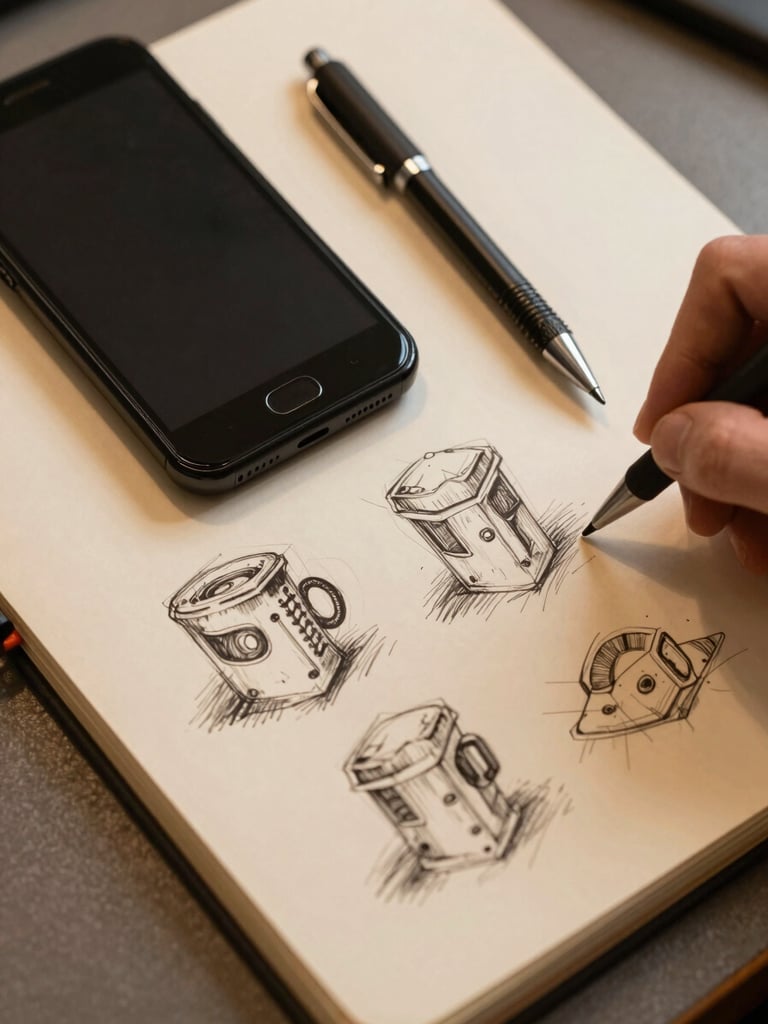
We choose what serves the work. We say no to the rest.
Thinner doesn't mean better if it costs you grip during a long shoot. Louder specs don't mean better if they come at the cost of a display tuned for accurate color.
The trade-offs are real. We make them deliberately, document them internally, and own them publicly. That's what craft-first hardware actually means.
Open Android isn't a concession. It's the whole point.
Makers need to connect their own tools, adapt their own workflows, and own their own files. A locked ecosystem is a landlord. We built on Android because openness is the architecture that creative work actually requires.